
Czas Na Piłkę / Blog / Training and injuries
Warm-up, injuries, recovery. A user manual for the adult footballer
Most amateur injuries can be prevented. The three pillars are a FIFA 11+ style warm-up, building load gradually and sleep. After 40 recovery takes longer, so your plan has to allow for it.
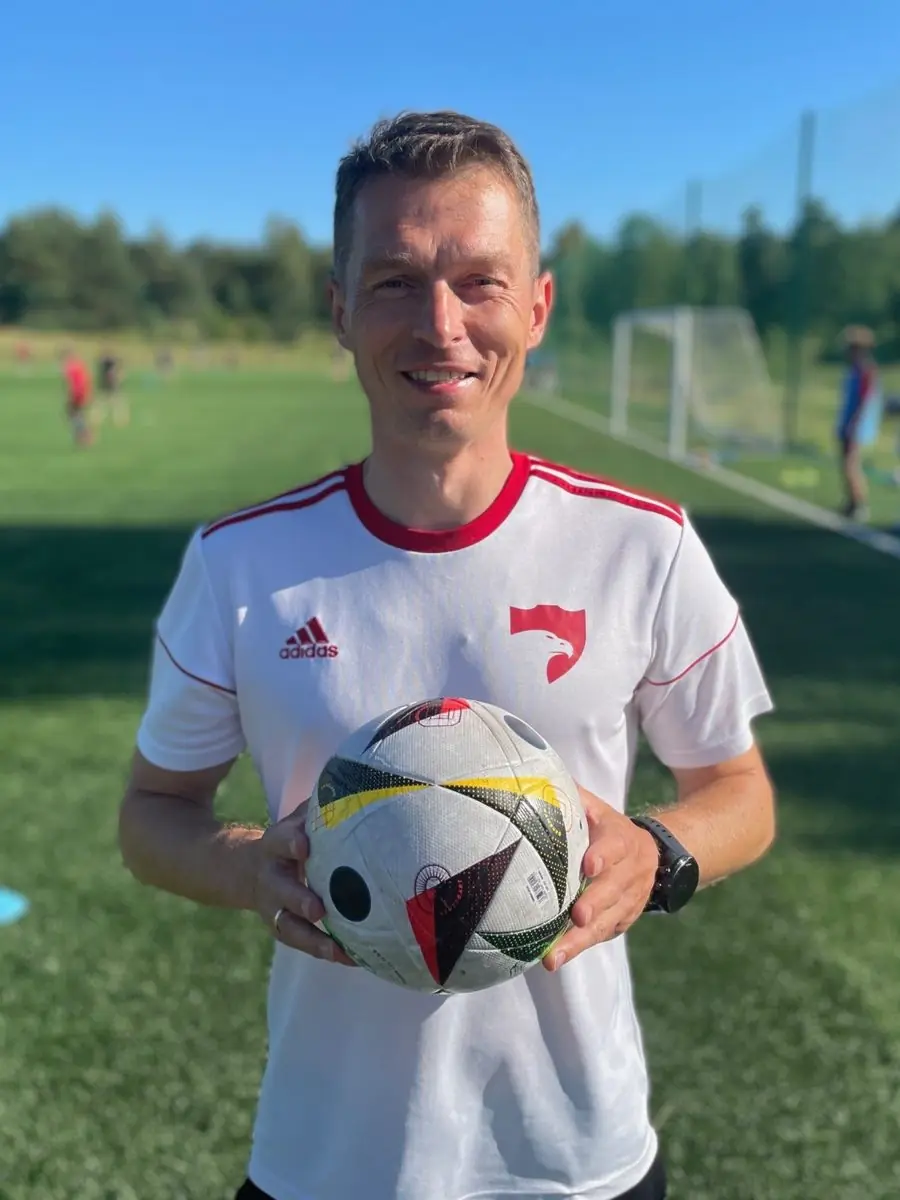 Tomasz OpanowskiUEFA B coach · 5 min read
Injury is the most common reason adults stop playing. And most amateur injuries can be prevented. The three pillars are a FIFA 11+ style warm-up, building load gradually and sleep. After 40 there is a fourth: patience, because recovery takes longer.
In short
The most common amateur injuries: ankle, knee, hamstring, calf and Achilles tendon
A few scenarios keep coming up among adult amateurs. A sprained ankle after landing badly. A knee during a sharp turn. A pulled hamstring in a sprint. The calf and Achilles tendon when accelerating, more often after 40.
The common factors: unprepared muscles, fatigue and sudden load. That is why prevention starts before your first touch of the ball.
The FIFA 11+ warm-up: what it looks like in practice
FIFA 11+ is a warm-up programme in three parts. The full version takes about 20 minutes. Meta-analyses show that, done regularly, it reduces injury risk by an average of 30%, and a 2025 study (Muscles) also confirmed its effect on ankle injuries.
The key word is “regularly”. The programme works when you do it at every session and with correct technique. That is why with us the coach leads it.
The FIFA 11+ warm-up step by step
0 z 5
Based on the FIFA 11+ programme. The coach adapts the order and the number of repetitions to the group.
At 25: the biggest risk is ambition and load spikes
At 25 your body recovers quickly, which makes it easy to overdo it. The typical mistake is a break followed by several games a week at full intensity. Your hamstrings and groin react to load spikes like that first. The rule: increase the number and intensity of games gradually, week by week. More in Your mid-twenties.
At 40: tendons, calves and longer recovery
After 40, tendons adapt to new loads more slowly and muscles need more time to rebuild. The calf and Achilles tendon need special attention when you come back after a break. Strength training helps: the World Health Organization recommends muscle-strengthening exercise at least twice a week, which is why strength is one of our fixed blocks. More in Football after 40.
|
Age 25 |
Age 40 |
|
|---|---|---|
|
Biggest risk |
Load spikes, playing beyond your fitness |
Tendons, calves, returning after a break |
|
Recovery |
Usually quick |
Longer, you feel your legs for a day or two |
|
Getting started |
Increase the number of games gradually |
A check-up with your doctor, one session a week |
|
Most important |
Warm up even when nothing hurts |
Strength, sleep and patience |
After training: cool-down, sleep, hydration, when to back off
- Cool-down: a few minutes of easy jogging and stretching to bring your heart rate back to resting.
- Sleep: the night after training is when your muscles rebuild.
- Hydration: drink before, during and after training, especially indoors.
- When to back off: sharp pain, swelling, pain that gets worse when you walk. Better to miss one session than six.
Good news for anyone afraid of injury: according to a 2018 analysis by Krustrup and colleagues, small-sided games cause relatively few injuries compared with an 11-a-side match. Fewer long sprints and fewer hard tackles.
Warning signs: stop playing immediately
Stop playing and tell the coach if you feel
- pain, pressure or burning in your chest,
- shortness of breath out of proportion to the effort,
- palpitations or an irregular heartbeat,
- dizziness or feeling like you are about to faint.
If the symptoms are severe or don't go away, call the emergency number 112.
Coach's tip
The best warm-up is the one you do every time. It doesn't have to be long or spectacular. It has to be regular. That is why nobody joins a game in our sessions without one.
With us the warm-up is standard, not optional
With us, the warm-up and injury prevention are a fixed part of every session. Sign up and play safely.
About the author
Tomasz Opanowski
Football coach with a UEFA B licence, on the pitch since 2007. Founder of the Młody Orlik football academy and coach at Czas Na Piłkę, where since 2018 he has been bringing adults who once hung up their boots back into the game. He writes about how to return to football after years away: sensibly, without injuries and with plenty of fun.
Play for years, not just hard
A warm-up, injury prevention and a coach who keeps an eye on your load. In every group.