
Czas Na Piłkę / Blog / Mind and team
The mind plays too. Football, stress and team relationships
Football develops physical, mental and social skills. And it is the team that keeps people playing longer than they would stick with training alone.
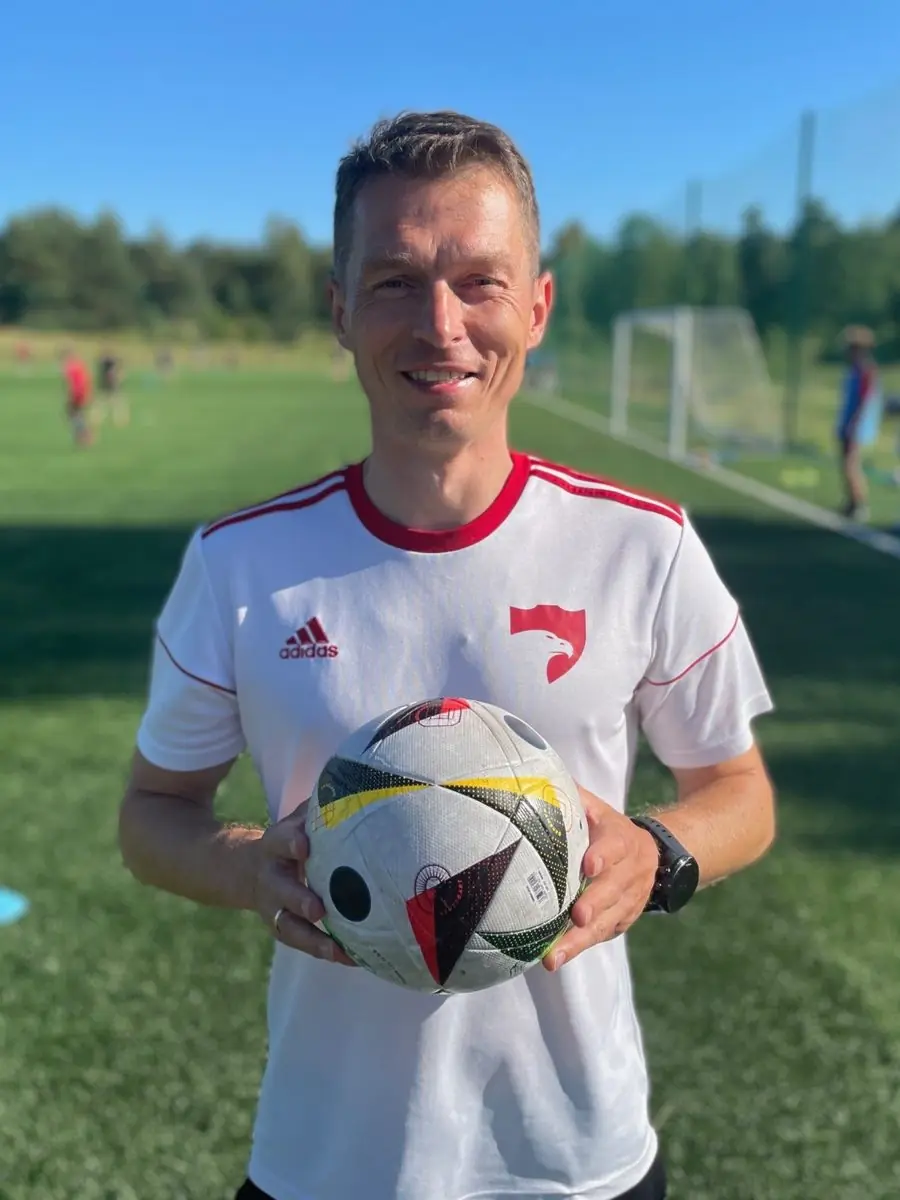 Tomasz OpanowskiUEFA B coach · 5 min read
We usually talk about football in numbers: kilometres, heart rate, calories. Yet many of us come back to the pitch for a different reason. For the people, for the emotions, for that hour and a half when your mind gets a rest. That isn't an extra. It is the main reason people keep playing for years.
In short
Physical skills: fitness, speed, agility, balance
We write about fitness in Football is Medicine. A less well-known effect is balance. In a 2011 study by Jakobsen and colleagues, playing football improved balance in untrained men. That matters beyond the pitch: better balance means a lower risk of falls and injuries in everyday life.
Mental skills: split-second decisions, focus, dealing with mistakes
In football you make decisions all the time: pass, dribble, shoot, get back to defend. You have a split second and nobody gives you a second chance. It is focus training no app can provide.
And mistakes. Everyone loses the ball, everyone misses. You learn to put a mistake behind you quickly, because the next move is seconds away. That skill comes in very handy off the pitch too.
Social skills: trust, communication, belonging
To win a small-sided game you have to talk to, trust and work with people you may have known for only a few weeks. A 2010 Danish study by Ottesen and colleagues on inactive adults suggested that team sports may have an advantage over individual sports in building social capital.
For many adults, the team is the only place where they regularly meet people outside work and family. If you have moved to Warsaw from abroad, it can also be one of the quickest ways to feel at home.
Exercise, depression and stress: what the meta-analyses show
The largest meta-analysis on the subject so far (Noetel et al., BMJ 2024) covered 218 studies and 14,170 participants. Walking and running, yoga and strength training produced a moderate reduction in symptoms of depression, and the higher the intensity, the greater the reduction. Football wasn't a separate category, so for football the evidence is indirect. But the mechanism is the same: intense effort, rhythm and contact with people.
Strength of evidence
- Strong Exercise eases symptoms of depression (meta-analysis of 218 studies, 14,170 people), although football wasn't a separate category.
- Moderate Recreational football: low perceived exertion and playing together years after the study (Bangsbo et al., 2015).
- Weak or indirect The advantage of team sports in building social capital (Ottesen et al., 2010, small group).
Research shows associations, but it doesn't replace seeing a doctor. If you have high blood pressure, diabetes or a heart condition, get checked before you return to playing.
Why the team beats the gym when it comes to sticking with it
In a 2015 study by Bangsbo and colleagues, recreational football had the lowest perceived exertion of all the activities studied: 3.9 on a 0-10 scale. The effort was high, but participants didn't experience it that way, because they were focused on the game.
What happened after the study is even more interesting. Men with diabetes who met through the project kept playing together for more than 2 years after it ended. Nobody made them. They came because a team was waiting for them.
Coach's tip
The best session is the one you want to turn up to. When you have no energy after work, remember that someone in the group is counting on you. You almost always leave training in a better mood than you arrived in.
League, camps, the dressing room: the Czas Na Piłkę community
With us, training is just the start. We have an internal league, Czas Na Ligę, now in its fifth edition, and sports camps in Spała, Gniewino and Januszkowo. We also have a volleyball section, Czas Na Siatkówkę.
Many people come along “to try it out” and stay for years. Not because they have to, but because they have people to play with.
Come and meet the group
The best session is the one you want to turn up to. No trials, in a friendly atmosphere.
Is your partner asking why you need those Tuesdays? Show them Why support his Tuesday training.
About the author
Tomasz Opanowski
Football coach with a UEFA B licence, on the pitch since 2007. Founder of the Młody Orlik football academy and coach at Czas Na Piłkę, where since 2018 he has been bringing adults who once hung up their boots back into the game. He writes about how to return to football after years away: sensibly, without injuries and with plenty of fun.
The team is waiting
Training, a league and camps. Join a group near you.